
Move Beyond Lingering Heel Pain This Fall
Persistent heel pain can make ordinary fall routines feel harder than they should. Uneven walking trails, school events, indoor workouts, and recreational sports can all put more stress on a sore heel. We often hear about pain with those first morning steps, discomfort after sitting, and aching that builds during activity.
For some people, heel pain improves with basic care. For others, it lingers and starts shaping how they walk, exercise, work, and rest. Shockwave therapy in Alexandria, VA may be a nonsurgical option we consider for qualifying patients whose symptoms have not improved with initial conservative treatment. A podiatric evaluation matters because plantar fasciitis is common, but it is not the only cause of heel pain.
Know When Plantar Fasciitis Needs More Support
Plantar fasciitis involves irritation or degeneration of the plantar fascia, a strong band of tissue that runs along the bottom of the foot and connects the heel to the toes. When this tissue is under repeated strain, it can become painful, especially near the bottom or inner side of the heel.
Common signs we may see include:
- Sharp heel pain with the first steps in the morning
- Pain that returns after sitting or resting
- Discomfort after standing for long periods
- Heel pain that worsens during or after exercise
- Tightness through the arch or calf
Heel pain can become stubborn when the foot does not have enough time or support to recover. Tight calf muscles, a sudden increase in walking, high-impact exercise, prolonged standing, unsupportive shoes, foot structure, and lingering strain after an injury may all play a role. Cooler weather can also bring changes in activity, including more walking and fall sports, that may aggravate symptoms.
We usually begin by looking at nonsurgical measures that fit your diagnosis and daily needs. Supportive footwear, activity changes, stretching, physical therapy, custom orthotics when appropriate, anti-inflammatory strategies, and night splints may all be part of a treatment plan. When pain continues despite these steps, we may need to look further for stress injuries, nerve problems, arthritis, tendon conditions, or other sources of heel discomfort.
See How Shockwave Therapy Targets Chronic Heel Pain
Extracorporeal shockwave therapy, often called ESWT, uses controlled acoustic waves directed at injured tissue. The goal is to stimulate the body’s healing response, support local circulation, and encourage tissue repair in chronic conditions such as plantar fasciitis. Results vary, and no treatment is right for every person or guaranteed to solve every type of heel pain.
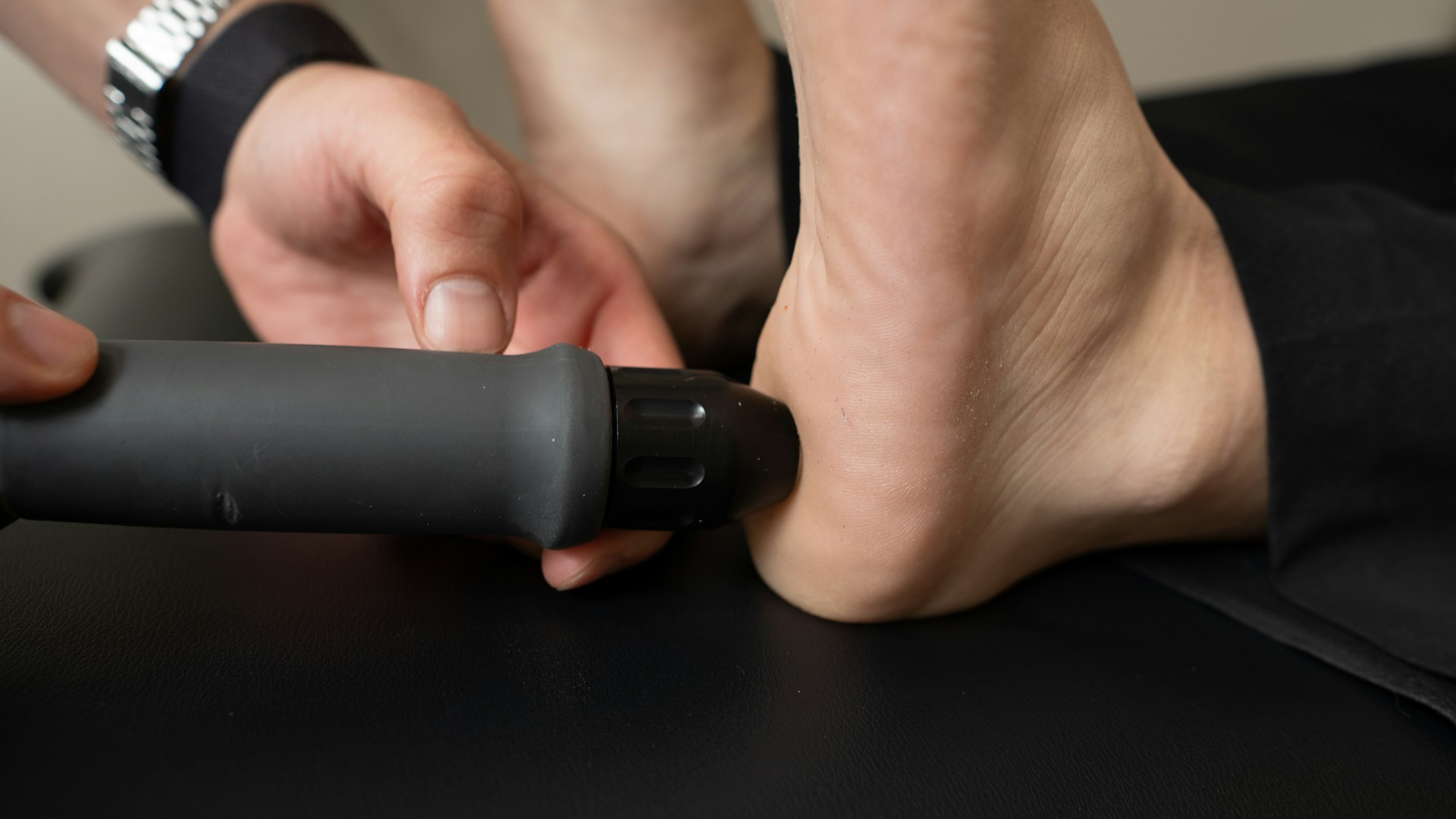
During shockwave therapy in Alexandria, VA, we first identify the area causing the most pain. Gel is applied to the skin, and a specialized device delivers acoustic waves to the treatment area. Sessions are performed in the office, and many people can return to regular daily tasks afterward, depending on their diagnosis and activity demands.
You may feel pressure or temporary discomfort during treatment. Some soreness afterward can also occur, much like the feeling after a demanding activity. Improvement is often gradual over several weeks as the body responds, rather than immediate. The number of sessions, recovery instructions, and any limits on exercise should come directly from your treating podiatrist.
Understand Treatment Timing, Benefits, and Limitations
Shockwave therapy is generally considered after heel pain has continued despite a consistent course of nonsurgical care. It can be appealing because it does not involve an incision, extended immobilization, or the type of recovery period sometimes associated with surgery. Still, it is not always the first recommendation for new heel pain.
When deciding whether ESWT may fit your needs, we consider several factors:
- How long your symptoms have been present
- Whether pain is limiting work, walking, or recreation
- Findings from your exam and any appropriate imaging
- Your overall health history and prior treatments
- Your activity goals and ability to follow recovery guidance
Not everyone is a candidate for shockwave therapy. Certain medical conditions, infections near the treatment area, circulation concerns, and other health factors may affect whether it is appropriate. A careful evaluation allows us to explain possible benefits, side effects, alternatives, and whether another approach, such as physical therapy or regenerative medicine, may be a better fit.
Schedule a Heel Pain Evaluation Before Symptoms Worsen
Heel pain deserves attention when it interferes with walking, exercise, work, or sleep. Waiting too long can lead to compensating with the way you walk, which may create discomfort elsewhere in the foot, ankle, leg, or back. Early assessment can help determine whether the concern involves plantar fasciitis, an ankle injury, a tendon issue, a stress fracture, or another condition.
At District Foot & Ankle, we provide personalized medical and surgical foot and ankle care for patients in Alexandria and throughout Northern Virginia. A complete evaluation gives us a clearer picture of your symptoms, previous treatment, and movement goals, so we can recommend care based on what your feet actually need.
The most helpful next step is to avoid guessing at the cause of chronic heel pain. A clear diagnosis can guide whether shockwave therapy, continued conservative care, or another evidence-based treatment is the most appropriate path toward more comfortable movement.
Take the Next Step Toward Easier Movement
At District Foot & Ankle, we can help you understand whether shockwave therapy in Alexandria, VA fits your treatment plan. Our team will review your symptoms, activity needs, and treatment history to discuss appropriate options. Contact us to schedule an evaluation and get personalized guidance for your heel pain.