
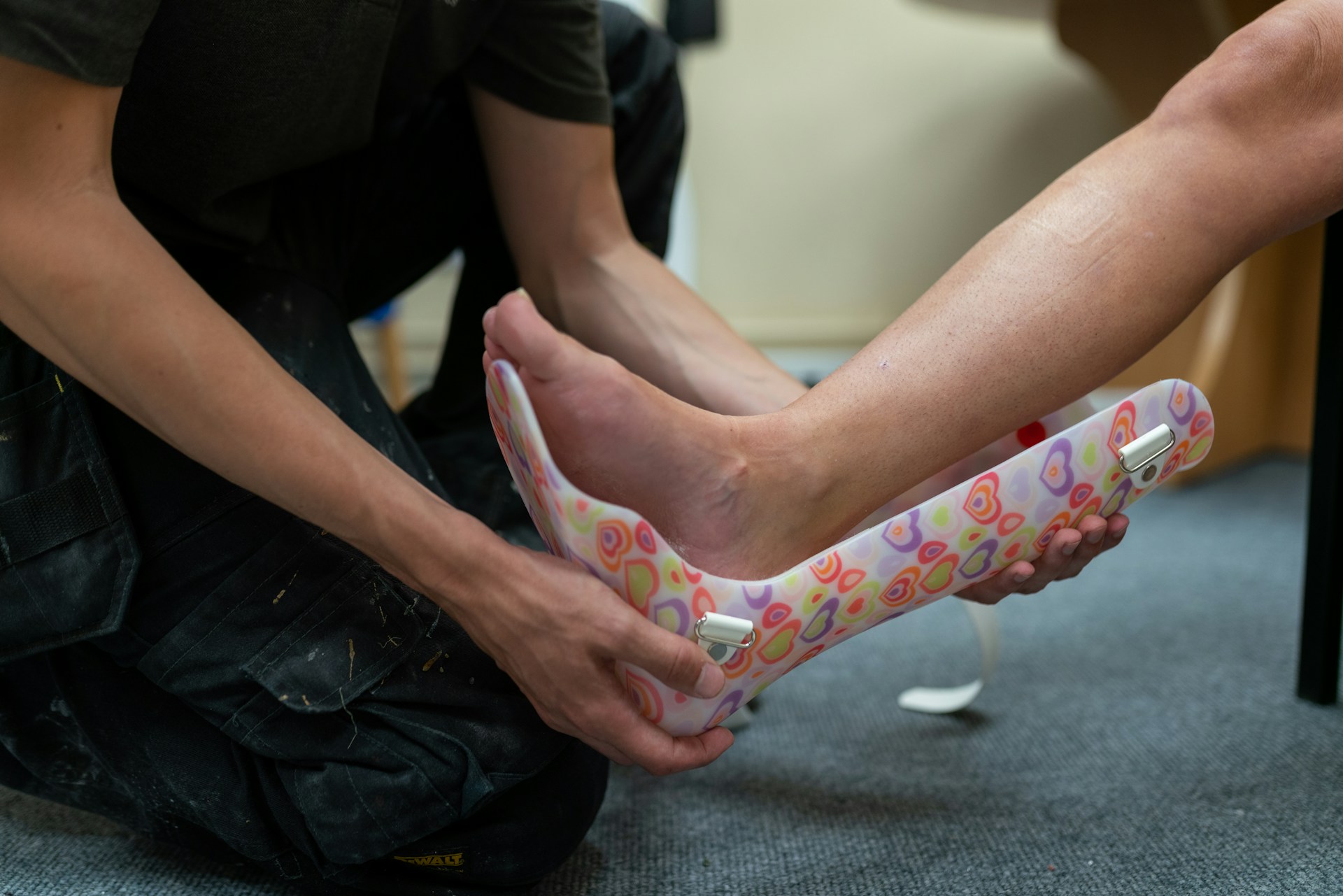
An ankle sprain can seem minor at first, especially after a quick slip on wet leaves, uneven pavement, or a misstep during fall sports. Yet pain, swelling, weakness, or an unsteady feeling that lasts for weeks may mean the injury needs a closer look.
At District Foot & Ankle, we know ankle sprains involve more than “twisting it wrong.” Ligaments may be stretched or torn, and nearby tendons, cartilage, nerves, or bone can also be affected. A podiatric evaluation can help us identify why recovery has slowed and what may be needed to support a safer return to daily activity.
How a Fall Can Injure More Than One Ligament
Most ankle sprains happen when the foot rolls inward. This places stress on the ligaments along the outside of the ankle, often called a lateral ankle sprain. The injury can range from a mild stretch to a partial or complete ligament tear.
Even after visible swelling improves, the ankle may still hurt because ligaments often take time to heal. The original fall may also have affected other structures around the joint, including:
- Peroneal tendons along the outside of the ankle
- Joint cartilage inside the ankle
- Bone tissue, including a bone bruise or small fracture
- Nearby nerves that may remain irritated after the injury
Trying to walk normally too soon or returning to exercise before the ankle feels stable can keep symptoms going. Each additional rolling episode can stretch weakened ligaments further and make the ankle less reliable over time.
For ankle sprain treatment in Alexandria, VA, we can assess whether your symptoms are related to incomplete ligament healing or an injury that was not obvious right after the fall.
Signs Your Ankle Needs Further Evaluation
Some soreness after an ankle sprain is expected, but ongoing trouble several weeks later deserves attention. If your ankle still changes the way you walk, limits the shoes you can wear, or makes you hesitate on stairs or uneven ground, it may not be ready for normal activity.
Symptoms we recommend discussing with a podiatrist include:
- Pain while walking or standing for longer periods
- Swelling or bruising that does not fully settle down
- Tenderness directly over a bone
- A feeling that the ankle gives out or rolls easily
- Difficulty getting back to normal work, exercise, or recreational activity
The location of your pain can offer helpful clues. Pain on the outside of the ankle may involve the lateral ligaments or peroneal tendons. Pain higher above the ankle can occur with a high ankle sprain. Deep pain, catching, or locking inside the joint may point to a cartilage concern.
Certain symptoms need prompt medical attention. These include an inability to bear weight, visible deformity, numbness, worsening warmth or redness, severe calf pain, or sudden major swelling. Imaging or immediate care may be needed to rule out more serious concerns.
What Ankle Sprain Treatment May Include
A lingering ankle sprain is not evaluated by pain alone. During an exam, we may assess your gait, ankle motion, tenderness, strength, and joint stability. X-rays can help rule out a fracture, while additional imaging may be considered when there is concern about ligament, tendon, or cartilage damage.
Treatment depends on the injury and your activity needs. Conservative care may include bracing, supportive footwear, activity changes, anti-inflammatory measures when appropriate, and a guided rehabilitation plan.
Rehabilitation should not focus only on making pain go away. The ankle also needs to regain the ability to react when you step off a curb, turn quickly, walk on uneven ground, or move through sports activity. We may recommend care that addresses:
- Range of motion after swelling and stiffness
- Strength in the ankle and lower leg
- Balance and body awareness
- Confidence with walking, stairs, and changing surfaces
Personalized ankle sprain treatment in Alexandria, VA can help you move from protection and pain relief toward stronger, steadier movement. The goal is to avoid the cycle of feeling better briefly, returning to activity, and rolling the ankle again.
When Chronic Ankle Instability May Need Surgical Repair
Chronic ankle instability means the outer ankle ligaments have remained loose or have not healed in a way that provides dependable support. You may notice repeated sprains, frequent rolling, ongoing pain, or a sense that the ankle cannot be trusted during routine movement.
Not every persistent sprain requires surgery. However, we may discuss a surgical evaluation when nonsurgical care has not improved stability, imaging shows significant ligament damage, or repeated sprains interfere with work, sports, or daily mobility.
Lateral ankle reconstruction surgery may be an option for qualifying patients with damaged outer ankle ligaments. The purpose is to repair or reconstruct those ligaments, improve stability, and reduce the risk of repeat injuries. Recovery is individualized and usually includes a planned period of protection followed by rehabilitation.
Protect Your Ankle During Winter Walking
Wet leaves, early winter weather, travel, and uneven sidewalks can all make a weak ankle more likely to roll again. Pain that lingers longer than expected is worth taking seriously, especially when you do not feel confident putting full weight on the foot.
Early evaluation can help identify the source of lingering discomfort before weakness becomes a repeating problem. Paying attention to pain, instability, and changes in how you walk can help guide the right next step toward steadier movement.
Get a Clear Plan for Lasting Ankle Relief
At District Foot & Ankle, we assess persistent ankle symptoms and tailor care to support a safer return to daily activity. Learn about ankle sprain treatment in Alexandria, VA and the options that may fit your needs. When you are ready to discuss your symptoms with our team, contact us to schedule an appointment.