
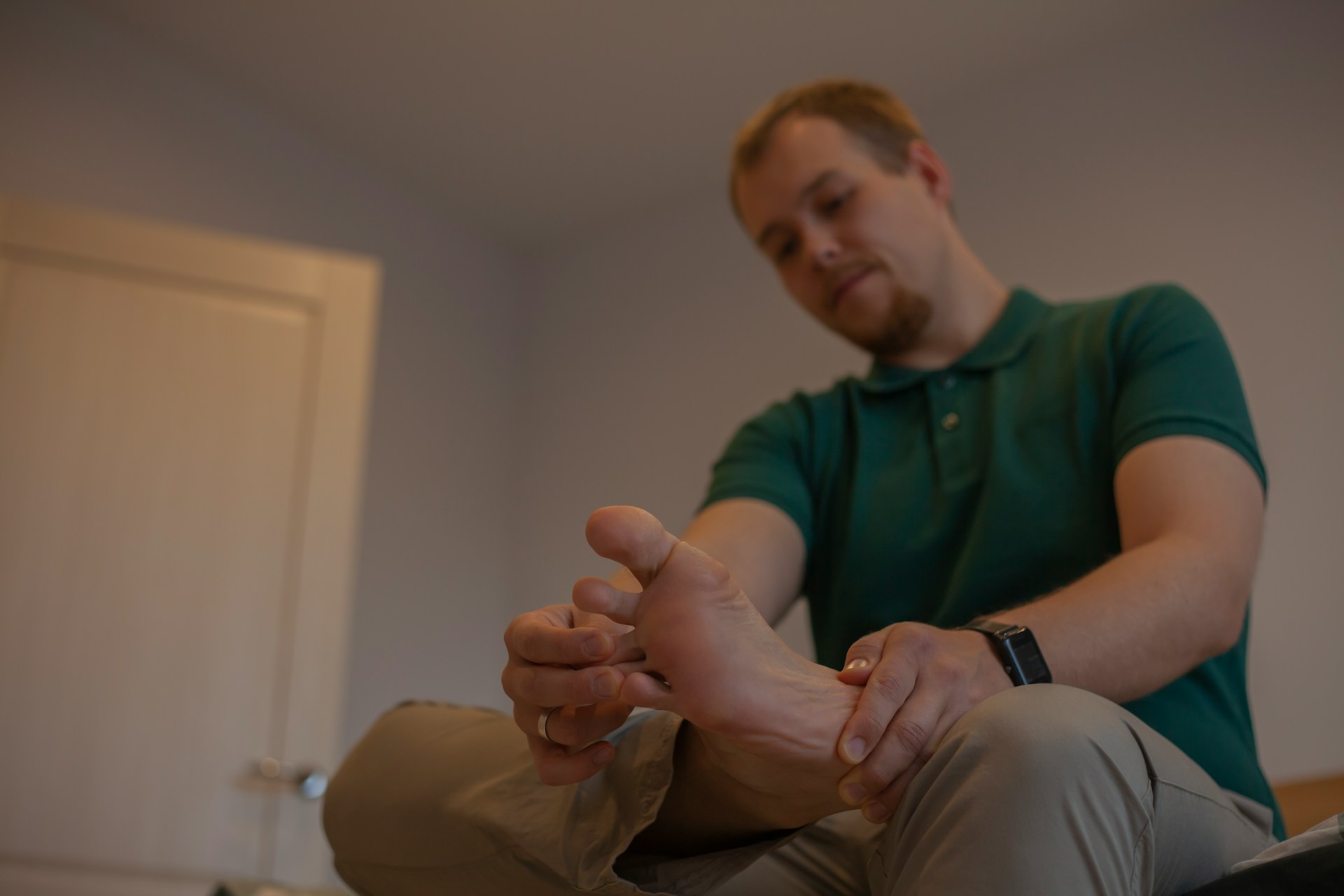
Make Your First Steps More Comfortable
Sharp heel pain when you step out of bed is more than an annoying way to start the day. That stabbing feeling near the bottom of your heel is one of the clearest signs of plantar fasciitis, and it can turn simple routines, like walking to the bathroom or making coffee, into a struggle.
We often see heel pain in active adults, people who stand for long workdays, and those getting back into exercise after a busy summer. In autumn, cooler-weather runs, charity walks, and a switch from supportive sneakers to boots or dress shoes can bring a previously mild problem to the surface. Understanding why the pain peaks after rest can help you recognize when it is time for a professional evaluation.
Why Heel Pain Peaks with Morning Steps
The plantar fascia is a thick band of tissue that runs along the bottom of your foot. It connects your heel bone to your toes and helps support the arch with every step. Repeated strain can irritate this tissue and create small areas of damage near where it attaches to the heel.
While you sleep, sit through a meeting, or spend time driving, the plantar fascia and calf muscles can tighten. When you stand and take those first steps, the tissue is suddenly stretched and loaded with pressure. That quick pull can cause the sharp pain that makes people pause or limp first thing in the morning.
Pain may settle down after you walk around for a few minutes. Still, that short-term improvement does not always mean the problem is gone. Heel discomfort often returns after a long day of standing, a workout, or extended walking. If the same first-step pain keeps coming back for weeks, we recommend having it assessed rather than waiting for it to disappear on its own.
Signs That May Point to Plantar Fasciitis
Plantar fasciitis can feel different from person to person, but several symptoms are especially common. The discomfort may affect one foot or both, and it may stay focused under the heel or spread into the arch.
Common signs include:
- Sharp or stabbing pain beneath the heel, especially after rest
- Tenderness along the bottom of the foot or through the arch
- Pain after rising from a chair, getting out of a car, or standing after sitting
- Soreness that gets worse after activity or a long time on your feet
- Tightness in the heel or calf area
Certain foot structures and daily habits can add stress to the plantar fascia. Tight calf muscles, flat feet, high arches, worn-out shoes, sudden increases in walking or running, and jobs that require long periods of standing can all play a role. Extra pressure on the feet may also contribute. Seasonal activity changes can matter, too, especially when fall footwear offers less cushioning or arch support than the sneakers you wore all summer.
A proper diagnosis matters because not all heel pain is plantar fasciitis. Stress fractures, nerve irritation, Achilles tendon problems, arthritis, and other foot and ankle conditions can cause similar symptoms. During an examination, we look at the whole foot and ankle, your movement, and the pattern of your pain so treatment is based on the actual cause.
Building a Recovery Plan Beyond Rest and Stretching
Resting for a day or trying an occasional stretch may feel helpful, but persistent heel pain usually needs a steady, personalized plan. After an evaluation, we may recommend changes that reduce stress on the irritated tissue while helping you return to normal movement safely.
Depending on your diagnosis, a care plan may include:
- Supportive footwear that better matches your foot shape and daily demands
- Heel cushions, supportive inserts, or custom orthotics when appropriate
- Targeted stretching for the calf muscles and plantar fascia
- Gradual strengthening and activity changes
- Taping or temporary immobilization for certain cases
As a plantar fasciitis doctor in Leesburg, VA, we consider more than where your heel hurts. Your foot structure, work routine, exercise habits, symptom history, and goals all help shape the plan. Someone preparing to return to running may need different guidance than someone whose heel pain worsens during long shifts on hard floors.
For heel pain that has not improved with initial care, shockwave therapy may be considered. This noninvasive treatment uses acoustic waves to stimulate the body’s healing response in damaged tissue. It is not the right choice for every type of heel pain, which is why we first confirm the diagnosis and review how your symptoms have responded to other treatment options.
When Persistent Heel Pain Needs Expert Attention
An evaluation is a good idea when heel pain lasts more than a few weeks, keeps interrupting daily activities, or does not improve after you reduce aggravating activity and wear more supportive shoes. Ongoing pain can change the way you walk. Over time, that compensation may put extra strain on the opposite foot, knees, hips, or back.
Some symptoms deserve more prompt attention because they may point to something other than routine plantar fasciitis. These include severe swelling, bruising, numbness, inability to bear weight, sudden pain after an injury, fever, or an open wound.
When symptoms keep returning, a plantar fasciitis doctor in Leesburg, VA can assess the foot and ankle as a whole and rule out other causes of heel pain. We can also discuss nonsurgical options, including shockwave therapy, when a consistent conservative plan has not brought enough improvement.
Take the Next Step Toward Lasting Heel Relief
Painful first steps are not something you simply have to accept as part of aging, work, or exercise. With an accurate diagnosis and a plan built around your needs, heel pain can often become more manageable and daily movement can feel more comfortable again.
Pay attention to the pattern of your symptoms, especially if morning pain keeps returning or begins affecting how you move through the day. Addressing heel pain early can help you avoid weeks of altered walking and give your foot the support it needs during the busy fall and holiday season.
Get a Clear Plan for Lasting Heel Relief
At District Foot & Ankle, we evaluate the factors contributing to your heel pain and create care plans tailored to your activity level and goals. Meet with a plantar fasciitis doctor in Leesburg, VA to discuss conservative treatments and other options that may help you move more comfortably. When you are ready to take the next step, contact us to schedule an appointment with our team.