
Start With the Cause of Burning Foot Pain
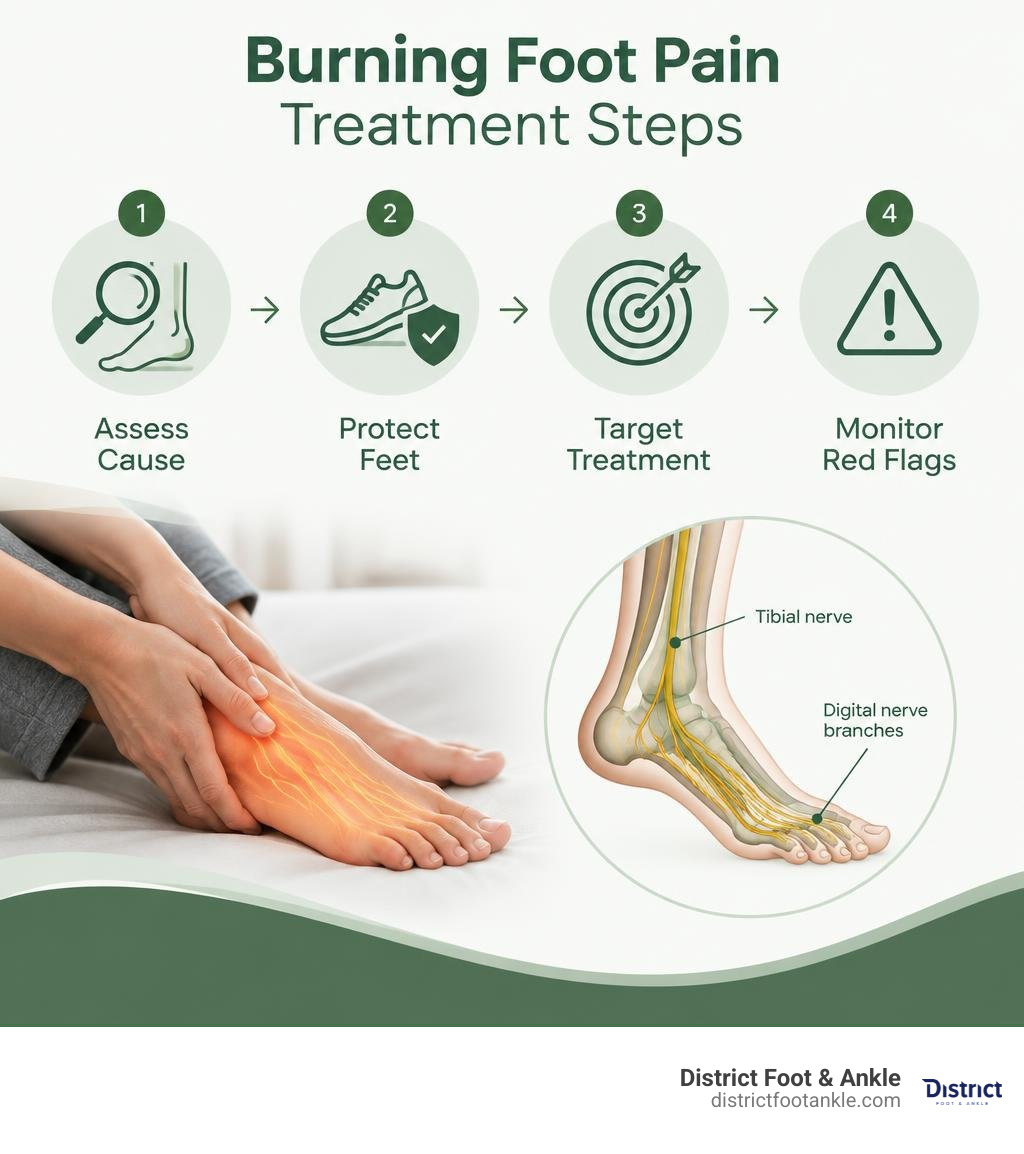
For fast burning foot pain treatment in Leesburg, start with a podiatry exam to find out whether nerve irritation, diabetes-related neuropathy, a pinched nerve such as tarsal tunnel syndrome, footwear pressure, or another foot condition is causing the sensation. While you wait for care, wear roomy shoes, avoid heat on numb skin, and note when symptoms worsen – especially if pain disrupts sleep.
Burning, tingling, or electric-like foot pain is not something to simply push through. The right treatment may include custom orthotics, activity changes, targeted therapy, medication coordination with your medical provider, or advanced options for chronic heel-related pain when standard care has not helped.
I am Lonny Nodelman, DPM, FACFAS, founder of District Foot & Ankle. With more than 13 years of foot and ankle care experience, including sports injuries, plantar fasciitis, nerve-related symptoms, and diabetic wound care, I help Northern Virginia patients pursue personalized burning foot pain treatment Leesburg plans that support safe, comfortable movement.
Identifying the Underlying Causes of Nocturnal Foot Burning
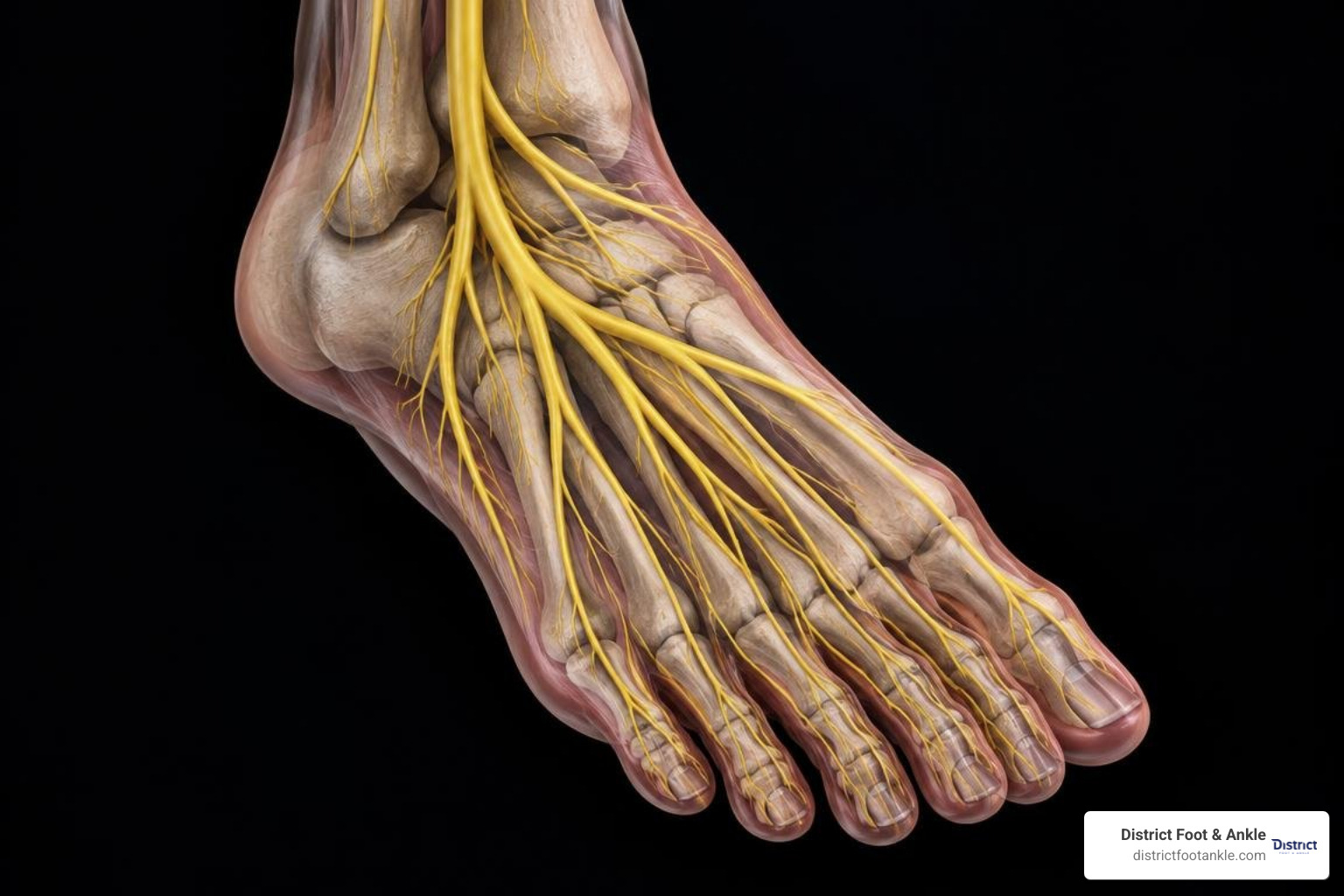
When you lie down after a busy day, you expect your body to rest. Yet for many people dealing with burning sensations in their feet, nightfall brings pins, needles, heat, and uncomfortable hypersensitivity. To resolve these symptoms, we must first pinpoint what is irritating the intricate neural pathways of your lower extremities.
The human foot contains complex networks of sensory nerves branching from the tibial nerve down to the tiny digital nerves between your toes. When these pathways suffer mechanical compression, metabolic stress, or inflammatory trauma, they misfire—sending burning or electrical signals directly to the brain.
Common culprits behind nocturnal foot burning include:
- Peripheral Neuropathy: Often stemming from metabolic conditions like diabetes, prolonged high blood sugar damages delicate microvascular structures that nourish your nerves. This leads to chronic tingling, burning, and progressive numbness. Vitamin deficiencies (such as B12 deficiency) and thyroid dysfunction can cause similar peripheral nerve distress.
- Morton’s Neuroma: A thickening of the tissue surrounding one of the digital nerves leading to your toes, typically between the third and fourth digits. It often feels like standing on a hot marble or having a burning fold in your sock.
- Tarsal Tunnel Syndrome: Much like carpal tunnel in the wrist, tarsal tunnel syndrome occurs when the posterior tibial nerve is compressed beneath the flexor retinaculum along the inside of your ankle. This creates shooting, burning pain along the arch and sole.
- Plantar Fasciitis with Nerve Irritation: Chronic inflammation of the plantar fascia can pull on neighboring medial calcaneal nerve branches, turning what starts as mechanical heel pain into a stubborn, hot, burning ache. You can read our guide to foot pain relief to see how structural arch strain often overlaps with localized nerve entrapment.
- Complex Regional Pain or Radiculopathy: Pinched nerves in the lumbar spine (sciatica) can refer burning pain straight down into the foot, even when the foot anatomy itself is intact.
Comprehensive Diagnostic Protocols for Nerve Pain
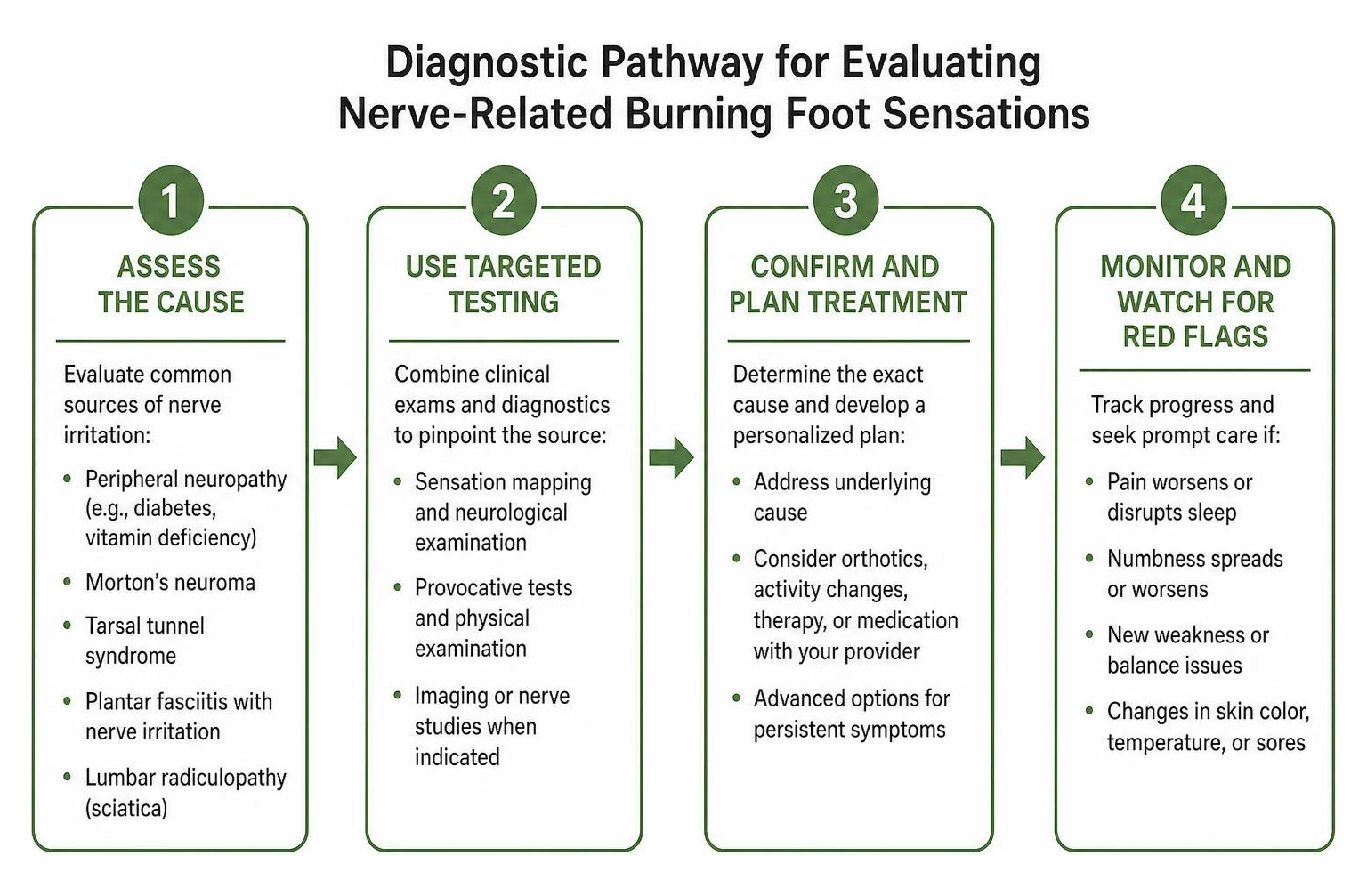
Because a burning sensation is a symptom rather than a standalone condition, successful care relies on an accurate, structured diagnosis. At our clinics, we avoid guessing games. We combine hands-on clinical assessments with modern diagnostics to isolate the exact source of your pain.
During your comprehensive diagnostic evaluation, our team utilizes:
- Sensation Mapping and Neurological Exams: We evaluate light touch, temperature discrimination, vibration perception (using tuning forks), and protective deep sensation (using Semmes-Weinstein monofilaments). This reveals whether your symptoms are localized to a specific nerve branch or follow a systemic pattern.
- Diagnostic Musculoskeletal Ultrasound: In-office high-resolution ultrasound lets us view soft tissues in real time. We assess nerve swelling, check for acoustic neuroma formation between metatarsal heads, and inspect the tarsal tunnel for cysts or mechanical impingement.
- Weight-Bearing Digital Radiographs (X-rays): Evaluating your feet under full body weight highlights bone spurs, joint degeneration, structural misalignments, or fallen arches that might be crowding adjacent nerve canals.
- Computerized Gait and Biomechanical Analysis: We observe how your foot strikes the ground during motion. Overpronation or excessive arch collapse can stretch peripheral nerves across rigid bony contours during each step.
- Referral for Advanced Electrophysiological Studies: When necessary, we coordinate nerve conduction velocity (NCV) testing or electromyography (EMG) to assess how effectively electrical signals travel through the lower leg.
Steps to Prepare for Burning Foot Pain Treatment Leesburg Consultations
To make the most of your initial consultation, a little preparation helps us fast-track your path to relief. Here is how you can prepare before stepping into our office:
- Keep a 7-Day Symptom Journal: Note the precise times your burning sensation peaks, what triggers it (standing, certain footwear, lying in bed), and what, if anything, brings temporary relief.
- Gather Your Footwear History: Bring in the shoes you wear most often—including everyday work shoes, athletic sneakers, and house slippers. Wear patterns on your soles offer clues about your biomechanics and pressure points.
- Compile Medical and Medication Lists: Bring an up-to-date record of past diagnoses (such as diabetes, back injuries, or autoimmune disorders), lab work, and current medications or nutritional supplements.
- Bring Prior Imaging or Test Results: If you have had previous spinal MRIs, lower extremity X-rays, or blood panels within the last year, bring copies for our review.
Advanced Options for Burning Foot Pain Treatment Leesburg Residents Trust
Treating burning foot pain requires a multi-modal strategy tailored to the root cause. While traditional care often focuses solely on dampening symptoms with oral pain medication, our philosophy focuses on addressing the mechanical, biological, and metabolic drivers of nerve distress.
| Treatment Modality | Best Suited For | Primary Benefit | Recovery Profile |
|---|---|---|---|
| Custom Functional Orthotics | Tarsal tunnel, flat feet, mechanical traction | Relieves mechanical tension along nerve canals | Immediate comfort; no downtime |
| Prescription Neuromodulators | Systemic neuropathy, severe night hypersensitivity | Calms overactive central and peripheral pain signals | Ongoing management; gradual titration |
| Radial Shockwave Therapy (EPAT) | Chronic fasciitis, tendon-related nerve entrapment | Stimulates biological tissue repair and blood flow | Non-invasive; zero downtime |
| Platelet-Rich Plasma (PRP) | Recalcitrant soft-tissue inflammation, chronic heel pain | Concentrated growth factors jumpstart natural healing | Minimally invasive in-office procedure |
| Targeted Cortisone Injections | Acute Morton’s neuroma, localized bursitis | Rapidly decreases localized inflammation and nerve swelling | Fast-acting relief; limits pressure on nerves |
| Microsurgical Nerve Decompression | Intractable physical nerve entrapment | Releases tight fibrous bands constricting peripheral nerves | Outpatient surgery; structured rehabilitation |
Non-Surgical Burning Foot Pain Treatment Leesburg Patients Prefer
Whenever possible, we focus on non-surgical, regenerative, and restorative approaches to alleviate nerve pain. Modern podiatric medicine gives us powerful tools to resolve nerve irritation without extended downtime.
- Extracorporeal Pulse Activation Technology (EPAT / Radial Shockwave Therapy): For patients whose burning foot pain is tied to chronic plantar fasciitis or Achilles tendinopathy, high-energy acoustic pressure waves break up fibrotic scar tissue, increase local microcirculation, and accelerate cellular metabolism. This relieves surrounding nerve tension and promotes tissue repair.
- Platelet-Rich Plasma (PRP) Therapy: By isolating the healing platelets and bioactive growth factors from a small sample of your own blood, PRP can be injected directly under ultrasound guidance around chronically inflamed, degenerated soft tissues. This triggers a targeted healing response for stubborn conditions that have not responded to standard care.
- Custom Functional Orthotics: Unlike generic off-the-shelf inserts, custom orthotics are prescribed from precise models of your feet. They realign your subtalar and midtarsal joints, stabilizing the arch and eliminating the repetitive traction that pinches the posterior tibial and plantar nerves.
- Targeted Physical Therapy and Nerve Gliding Exercises: Specialized stretches improve flexibility in the calf muscles and Achilles tendon while gentle nerve mobilization restores normal movement along the nerve pathway, preventing it from snagging on surrounding tissue.
If you are ready to explore personalized non-surgical care, you can secure an appointment through online patient registration to visit our Leesburg or Alexandria office.
At-Home Remedies, Lifestyle Adjustments, and Surgical Indications

While professional medical care is essential for long-term resolution, practical at-home measures can help soothe burning symptoms and improve your sleep:
- Cool Water Soaks: Soak your feet in cool (not ice-cold) water for 10 to 15 minutes before bed. Never apply direct ice or freezing water to numb or neuropathic feet, as reduced skin sensation can lead to accidental thermal injury.
- Topical Relief: Over-the-counter creams containing low-dose capsaicin, menthol, or lidocaine can temporarily desensitize overactive surface nerve receptors when applied before sleep. Always wash your hands thoroughly after applying capsaicin.
- Ergonomic Bedding Adjustments: If heavy blankets press against your sensitive toes at night, use a bed cradle or drape a lightweight blanket over a pillow at the foot of your bed to keep pressure off your feet.
- Elevate and Stretch: Elevating your legs on a pillow reduces dependent edema (fluid buildup) that can compress nerves in the tarsal tunnel. Gentle calf and plantar fascia stretching before bed also eases resting tissue tension.
- Maintain Stable Blood Sugar: For individuals with metabolic or diabetic neuropathy, maintaining consistent, target blood glucose levels is critical to prevent ongoing nerve damage.
Red Flags: When to Seek Immediate Attention or Consider Surgery
While many cases improve with conservative therapies, certain symptoms require prompt medical care:
- Sudden, progressive muscle weakness in the foot or ankle (such as “foot drop” or difficulty lifting the toes).
- Non-healing open sores, blisters, ulcers, or localized skin redness and warmth, especially if you have reduced sensation.
- Rapidly spreading numbness traveling up the calf.
- Burning pain that persists despite months of structured conservative therapy.
When physical entrapment—such as severe tarsal tunnel syndrome or a large intermetatarsal neuroma—does not respond to conservative care, surgical nerve decompression or neuroma excision can remove the structural restriction, relieve pressure, and restore long-term comfort.
Frequently Asked Questions About Burning Foot Pain in Leesburg
Why does burning foot pain intensify at night?
Burning sensations often feel worse at night due to a combination of physiological and environmental factors. When you lie still, your brain receives fewer competing sensory signals (like the pressure of shoes or the movement of walking), making underlying nerve misfiring much more noticeable. Additionally, natural circadian drops in your body’s anti-inflammatory cortisol levels at night can increase localized inflammation around compressed nerves. Cooler bedroom temperatures can also heighten resting peripheral nerve sensitivity.
How many shockwave therapy sessions are required for relief?
Most patients undergoing radial shockwave therapy (EPAT) for chronic soft-tissue and nerve-related heel conditions receive three to five weekly sessions, each lasting about 10 to 15 minutes. Because shockwave works by stimulating your body’s natural regenerative and repair processes, benefits are cumulative. Many people notice improvements within a few weeks as local blood flow increases and chronic tissue tension subsides.
When is surgery necessary for burning foot pain?
Surgery is typically reserved for cases where conservative treatments—including custom orthotics, targeted injections, physical therapy, and regenerative options—have not provided adequate relief over several months, or when diagnostic imaging confirms a distinct mechanical nerve entrapment. If a tight fibrous band, bone spur, or enlarged benign mass is physically compressing the nerve, surgical decompression can relieve that pressure and prevent permanent nerve damage.
Conclusion
Living with burning foot pain can drain your energy, disrupt your sleep, and limit your daily mobility. However, you do not have to accept nightly discomfort as an inevitable part of life. By accurately diagnosing whether your symptoms stem from nerve entrapment, metabolic neuropathy, tendon inflammation, or mechanical strain, you can take meaningful steps toward real, lasting relief.
At District Foot & Ankle, our team combines extensive surgical expertise with advanced regenerative therapies to restore comfortable, active movement. Dr. Lonny Nodelman graduated in the top 4 of his class at the New York College of Podiatric Medicine, completed comprehensive residency training at Cambridge Health Alliance, and served as a fellow in surgery at Harvard Medical School. Alongside Dr. Sammar Abueldoleh, our board-certified podiatrists provide personalized, patient-centered care for individuals throughout Northern Virginia.
Whether you need advanced non-surgical therapies or a thorough diagnostic workup, we are here to help you get back on your feet. For more details or to schedule a consultation, visit District Foot & Ankle at our Leesburg office (224D Cornwall St NW, #203, Leesburg, VA 20176) or our Alexandria location (4875 Eisenhower Avenue, Suite 230, Alexandria, VA 22304). We look forward to helping you enjoy peaceful, restful nights once again.