
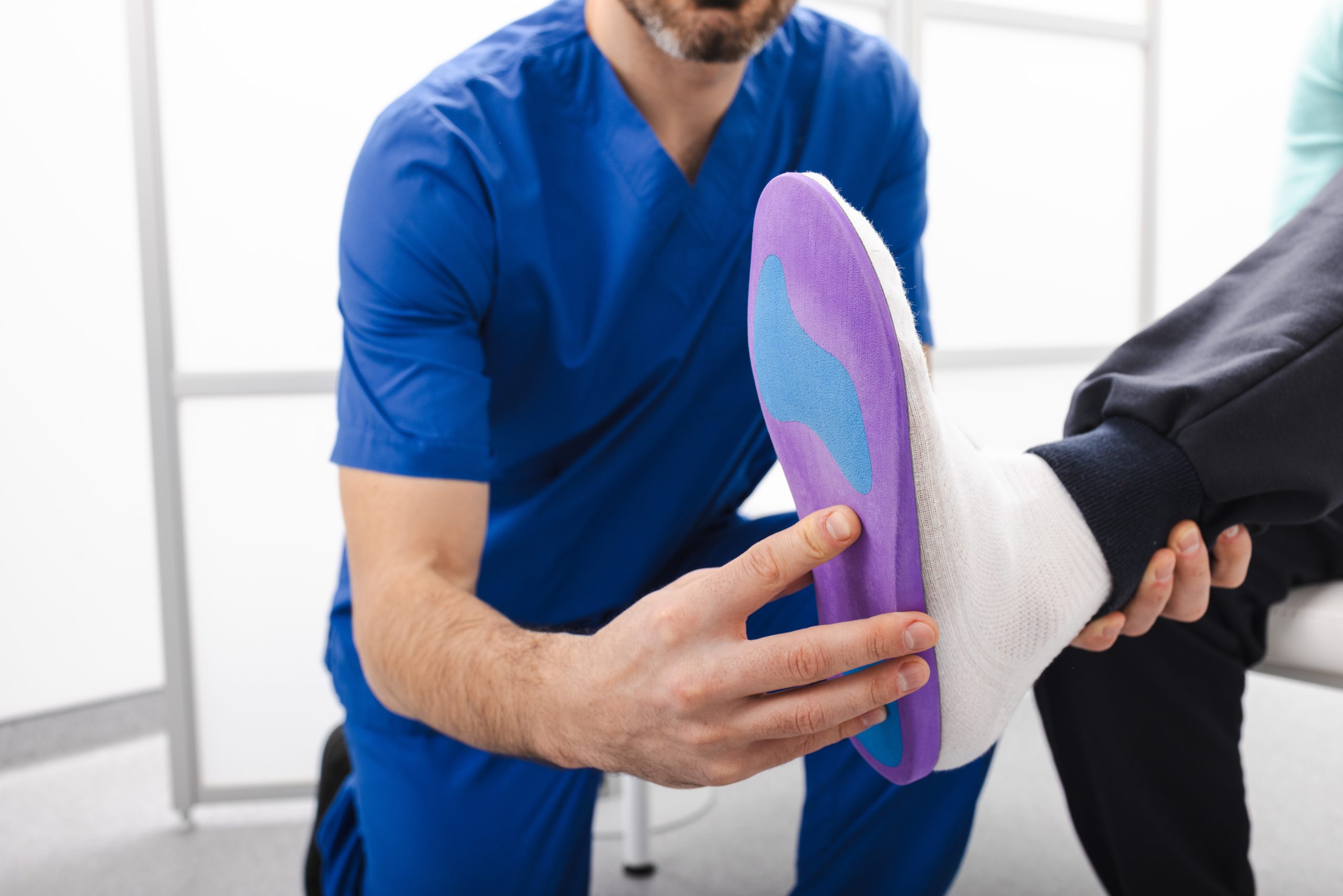
Somebody told you that you need custom orthotics. Maybe it was a podiatrist, maybe a physical therapist, maybe the person who watched you walk on a treadmill at a running store. Then you went looking for the custom orthotics cost in Northern Virginia and found almost nothing useful: national ranges that span several hundred dollars, vendor pages that never name a number, and no way to tell whether the quote you were given is reasonable.
That silence is the problem. So here is the honest version: what these devices actually are, what drives the price up and down, the specific questions that get you a real answer from your insurance company, and the situations where a much cheaper option is the sensible first try.
Table of Contents
- Why somebody told you that you need custom orthotics
- What custom orthotics cost, and what actually moves the number
- The questions to ask your insurer before you order anything
- When an over the counter insert is a reasonable first try
- What a fitting visit actually involves
- Frequently Asked Questions
- Getting a straight answer on cost in Alexandria and Loudoun
Why somebody told you that you need custom orthotics
A custom foot orthosis is a device made to the shape of your foot, from a cast, a foam impression or a 3D scan, and built to a prescription. The idea is to change how load moves through your foot while you stand and walk. Podiatrists prescribe them for heel and arch pain, for flatfoot and high-arched feet that load unevenly, for forefoot pain, and for diabetic feet where pressure needs to be redistributed away from a vulnerable spot.
The American Podiatric Medical Association draws a useful line between two categories: functional orthoses, which are made from firmer materials and are intended to control motion, and accommodative orthoses, which are softer and intended to cushion and offload. Those are different devices for different problems, and knowing which one is being recommended to you is the first step toward understanding the price.
What a custom device cannot do is promise you a particular result. It is one tool among several, and for many people it works best alongside stretching, footwear changes or physical therapy rather than instead of them.
What custom orthotics cost, and what actually moves the number
The single biggest driver is whether the device is genuinely custom or prefabricated. A prefabricated insert is made in standard shapes and sizes and is picked off a shelf to suit your foot. A custom device is manufactured for your foot alone. The difference in labour and materials is real, and it is most of the difference in price.
After that, the things that move the number are:
- The examination itself. A new patient exam is billed separately from the device. If you are a new patient, that is a line item before anyone casts anything.
- Imaging, if it is ordered. X-rays are billed separately when they are needed to understand a deformity or rule out a fracture.
- The impression method. Casting, foam box impressions and 3D scanning are not identical processes and do not always cost the same.
- The prescription. A simple accommodative device and a rigid functional device with posting and modifications are not the same build.
- Whether you need one pair or two. Some people want a second pair for a different shoe type, such as dress shoes or cleats.
- Adjustments after delivery. Adjustments in the first few weeks of wear are common. Ask whether they are included.
District Foot & Ankle publishes a cash pay price list covering exams, imaging and custom orthotics, which means you can see the practice’s own current numbers rather than a range someone estimated. The page carries its own note that final out of pocket cost cannot be determined before a physician examines you, and that caveat is worth taking seriously: a cash price is a known starting point, not a prediction of what your plan will leave you owing.
The questions to ask your insurer before you order anything
This is the part that saves people the most money, and almost nobody does it. Coverage for custom orthotics varies enormously between plans, sometimes between two plans from the same carrier. Nobody at a medical office can tell you what your specific plan will pay. You can find out in one phone call.
Call the number on the back of your card and ask, in this order:
- Does my plan cover custom foot orthotics, and under which benefit? (Many plans handle them under durable medical equipment rather than under your regular office visit benefit, which changes everything downstream.)
- Where am I on my deductible this year, and does this benefit sit inside or outside that deductible?
- Is prior authorization required, and if so, what does my doctor need to submit?
- Is there a quantity limit, for example one pair per year or per lifetime?
- Are there diagnoses my plan excludes for this benefit?
- If the office is out of network for me, what is my out of network benefit for this item?
Write down the name of the person you spoke to and the reference number for the call. If your coverage turns out to be poor, you have lost twenty minutes and saved yourself a surprise. If it turns out to be good, you can book knowing roughly where you stand.
Not sure whether this is worth a visit yet? Ask about custom orthotics pricing before you commit to anything. Asking what an exam and a custom device would cost commits you to nothing.
When an over the counter insert is a reasonable first try
Here is the part most orthotics content leaves out, because it does not sell anything.
For a fair number of people with straightforward heel or arch pain and no structural deformity, a quality prefabricated insert combined with better footwear and a consistent stretching routine is a reasonable first step. It costs a fraction of a custom device. If it helps, you have solved the problem cheaply. If it does not help after a genuine trial of several weeks, you have learned something useful, and you walk into the next appointment with better information rather than a guess.
There are situations where that first try is not the right approach. A diabetic foot with reduced sensation, a significant structural deformity, a foot that has already had surgery, or pain that has persisted for months despite sensible self-care are all reasons to be examined before spending money on anything. And if you have diabetes and you have noticed a sore, a callus that is changing, or numbness, that is a reason to be seen promptly rather than to experiment with inserts.
A podiatrist who is willing to tell you that the cheaper option is worth trying first is giving you better information, not less care. Patients at this practice consistently describe a doctor who checks coverage before recommending an expensive option and offers a less costly route when one exists. That posture is the point, and it is the kind of cost conversation worth asking for.
What a fitting visit actually involves
If you and your doctor decide a custom device makes sense, the visit is not mysterious. You are examined standing, sitting and walking. The clinician looks at how your foot loads, where it is tender, and how your ankle and knee behave as you move. If imaging is needed, it is taken and discussed with you. An impression of your foot is taken by cast, foam or scan. The prescription is written, the device is fabricated, and you come back to have it dispensed and checked.
Break-in is gradual on purpose. Most people wear a new device for a short period the first day and build up over one to two weeks, and adjustments along the way are common. How your symptoms respond varies from person to person, and depends a great deal on what is actually causing them, so a clinician who describes a range rather than a date is being straight with you.
You can read more about the orthotics fitting process at District Foot & Ankle, and if heel pain is what started all this, the practice’s plantar fasciitis page covers where orthotics sit among the other options.
Frequently Asked Questions About Custom Orthotics Cost
How much do custom orthotics cost?
Cost depends on whether the device is genuinely custom or prefabricated, what the examination and any imaging add, how complex the prescription is, and whether adjustments are included. District Foot & Ankle publishes its own current cash prices for exams, imaging and custom devices on its cash pay prices page, which lets you see real numbers rather than a national estimate. What you personally owe also depends on your plan.
Are custom orthotics covered by insurance?
Sometimes, and it varies a great deal between plans. Many plans handle custom orthotics under a durable medical equipment benefit rather than a standard office visit benefit, which affects your deductible and any prior authorization requirement. No medical office can tell you what your plan pays. Call the number on your card and ask about the benefit, your deductible status, prior authorization and any quantity limits.
Is there a real difference between custom orthotics and store-bought inserts?
Yes. A prefabricated insert is made in standard shapes and selected to suit your foot. A custom device is manufactured from an impression of your foot to a written prescription. Whether that difference matters for you depends on what is causing your symptoms. For some straightforward problems a good prefabricated insert is a reasonable first try. For structural problems it often is not, and a diabetic foot should be examined before you try any insert, because reduced sensation can mask a developing wound.
Do I actually need custom orthotics?
That is a question for an examination rather than a website. In general, a foot with a significant structural deformity, a diabetic foot with reduced sensation, a foot that has had surgery, or pain that has not budged after months of sensible self-care are the situations where custom devices are most often prescribed. Straightforward early heel pain is often worth trying simpler measures for first.
How long do custom orthotics last?
It varies with the materials, your weight, your activity level and how many hours a day you wear them. Devices are not permanent, and they are usually checked and sometimes adjusted over time. Ask at your fitting how the specific device you are getting is expected to wear, and whether adjustments are included in what you paid.
Getting a straight answer on cost in Alexandria and Loudoun
The Alexandria office sits at 4875 Eisenhower Avenue, Suite 230, just off the Eisenhower Avenue corridor and a short hop from the Beltway and Route 1, with its own building parking rather than the street-parking lottery you get closer to Old Town. That matters more than it sounds for orthotics specifically, because this is a service that involves at least two visits: one to be examined and cast, one to have the device dispensed and checked. A practice you can get in and out of on a lunch break is a practice you will actually return to for the follow-up adjustment, and that visit matters.
The Leesburg office at 224D Cornwall Street NW, Suite 203, serves a genuinely different market. Patients coming from Ashburn, Sterling, Lansdowne and Purcellville are making a Loudoun trip, not a Beltway trip, and the alternative for many of them has been driving down the Dulles corridor toward Fairfax or into Alexandria for a device fitting. If you are west of Route 28, ask for the Leesburg office when you call rather than defaulting to the Alexandria one. Ask which office has the next available fitting appointment when you call.
Ask about custom orthotics pricing, at the Alexandria office or in Leesburg, before you agree to anything. If you would rather just get the process moving, you can book a fitting directly.
Medically reviewed by Dr. Lonny Nodelman, DPM, FACFAS, on September 14, 2026. Dr. Nodelman is Board Certified in Foot Surgery by the American Board of Foot and Ankle Surgery and a Fellow of the American College of Foot and Ankle Surgeons.
This article is general information about foot and ankle care and about how costs and insurance benefits generally work. It is not medical advice, it does not diagnose any condition, and it does not describe what any specific insurance plan will pay. Coverage varies by plan. For advice about your own feet, see a licensed clinician.