

Fast Relief Starts With the Right Cause of Alexandria Foot Pain
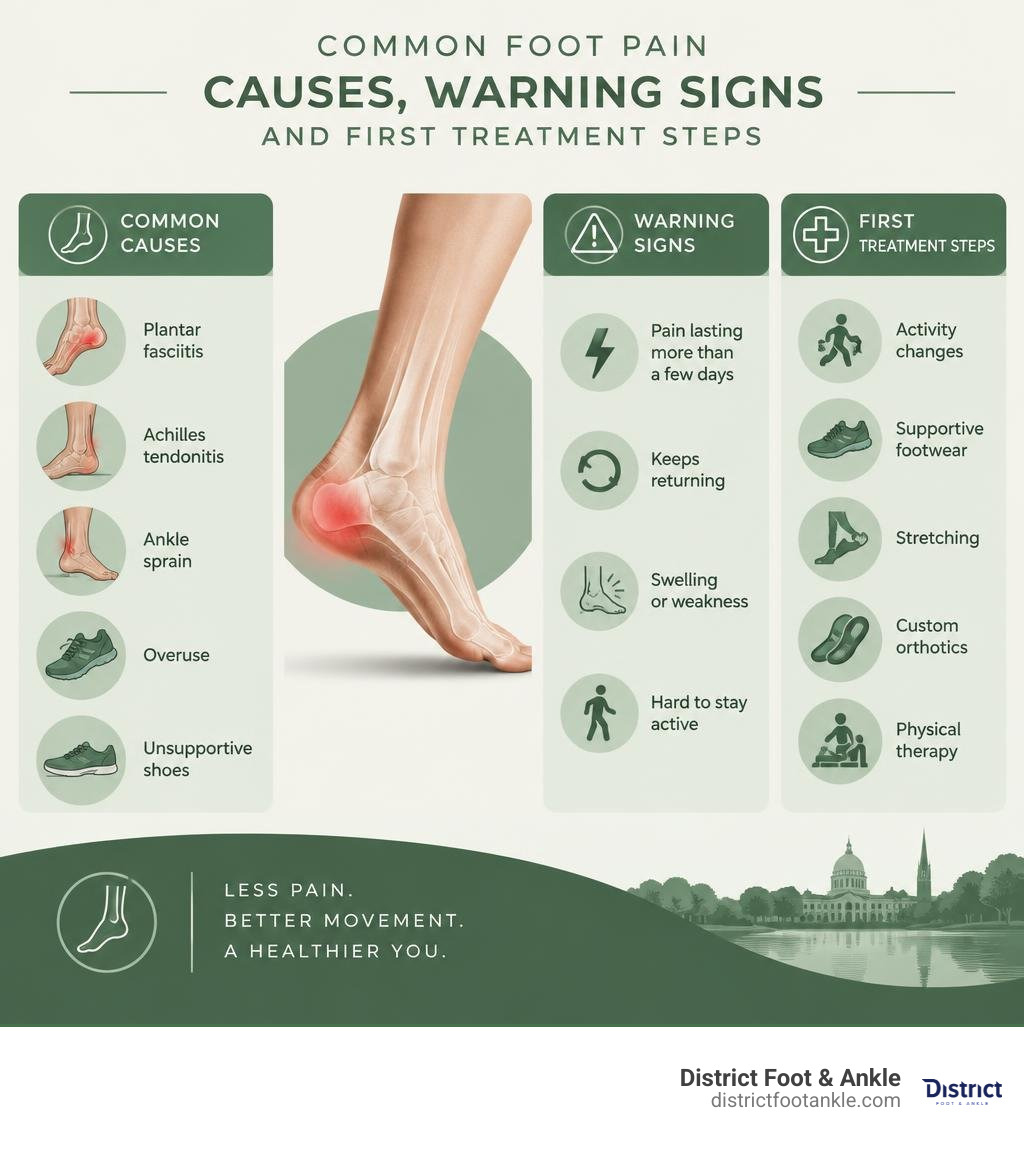
Alexandria Foot Pain is often caused by plantar fasciitis, Achilles tendonitis, an ankle sprain, overuse, or shoes that do not support the way you walk. If pain lasts more than a few days, keeps returning, causes swelling or weakness, or makes it hard to stay active, a podiatric assessment can identify the source and guide treatment.
Many people can start with non-invasive care, such as activity changes, supportive footwear, stretching, custom orthotics, and physical therapy. But severe pain after an injury, inability to bear weight, numbness, an open wound, or signs of infection should be evaluated promptly.
For active adults in Northern Virginia, foot pain can turn a walk through Old Town, a run, or a day on your feet into a frustrating limitation. The goal is not simply to mask symptoms. It is to understand what is stressing the foot or ankle, restore comfortable movement, and lower the chance that pain returns. Patients can also learn more about local care options through our Alexandria podiatry office.
I am Lonny Nodelman, DPM, FACFAS, founder of District Foot & Ankle and a board-certified podiatrist with more than 13 years of experience treating Alexandria Foot Pain, sports injuries, tendon problems, fractures, and complex foot and ankle conditions. My work combines personalized conservative care with surgical expertise when a structural problem needs more than rest and rehabilitation. For a broader overview of how podiatrists classify and manage these conditions, the American Podiatric Medical Association provides patient-focused guidance on foot health and common disorders.
Understanding the Root Causes of Alexandria Foot Pain
Every step you take places forces equal to several times your body weight directly onto the 26 bones, 33 joints, and over 100 muscles, tendons, and ligaments that comprise the human foot. When these intricate structures function harmoniously, you move effortlessly. However, when repetitive stress, sudden trauma, or mechanical misalignment enters the equation, localized inflammation and tissue breakdown quickly follow.

Across our clinical locations in Northern Virginia, we have treated over 1,000 local residents struggling with acute and chronic lower extremity issues. The underlying origins of these conditions typically fall into distinct categories:
- Plantar Fasciitis: Characterized by sharp, stabbing pain near the bottom of the heel, this condition stems from micro-tears and inflammation within the thick band of tissue (plantar fascia) supporting your arch. It is notoriously intense during your first morning steps when the tightened ligament is abruptly stretched.
- Achilles Tendonitis: The Achilles tendon connects your calf muscles to your heel bone. Overuse, tight calf muscles, or rapid increases in athletic intensity can cause microtrauma along this tendon, creating burning sensations, morning stiffness, and localized swelling above the heel.
- Ankle Sprains and Chronic Instability: An accidental twist or roll can overstretch or tear the stabilizing lateral ligaments. Inadequately rehabilitated sprains often lead to repetitive “giving way” sensations, joint laxity, and prolonged inflammation.
- Ingrown Toenails and Nail Border Trauma: When the edge of a toenail curls and pierces the surrounding periungual skin, it invites localized infection, swelling, and throbbing pain that makes closed-toe shoes nearly unwearable.
- Stress Fractures and Bone Bruises: Tiny hairline cracks in the metatarsals or calcaneus develop when muscles fatigue and can no longer absorb shock, transferring excessive load straight into the skeletal framework.
How Lifestyle Factors Impact Alexandria Foot Pain
Living and working in Northern Virginia exposes our lower extremities to unique environmental and biomechanical stressors. A leisurely weekend stroll through historic Old Town Alexandria means navigating uneven brick sidewalks and centuries-old cobblestones. While charming, these irregular surfaces force your stabilizing tendons and intrinsic foot muscles to make micro-adjustments with every stride, quickly exhausting fatigued feet.
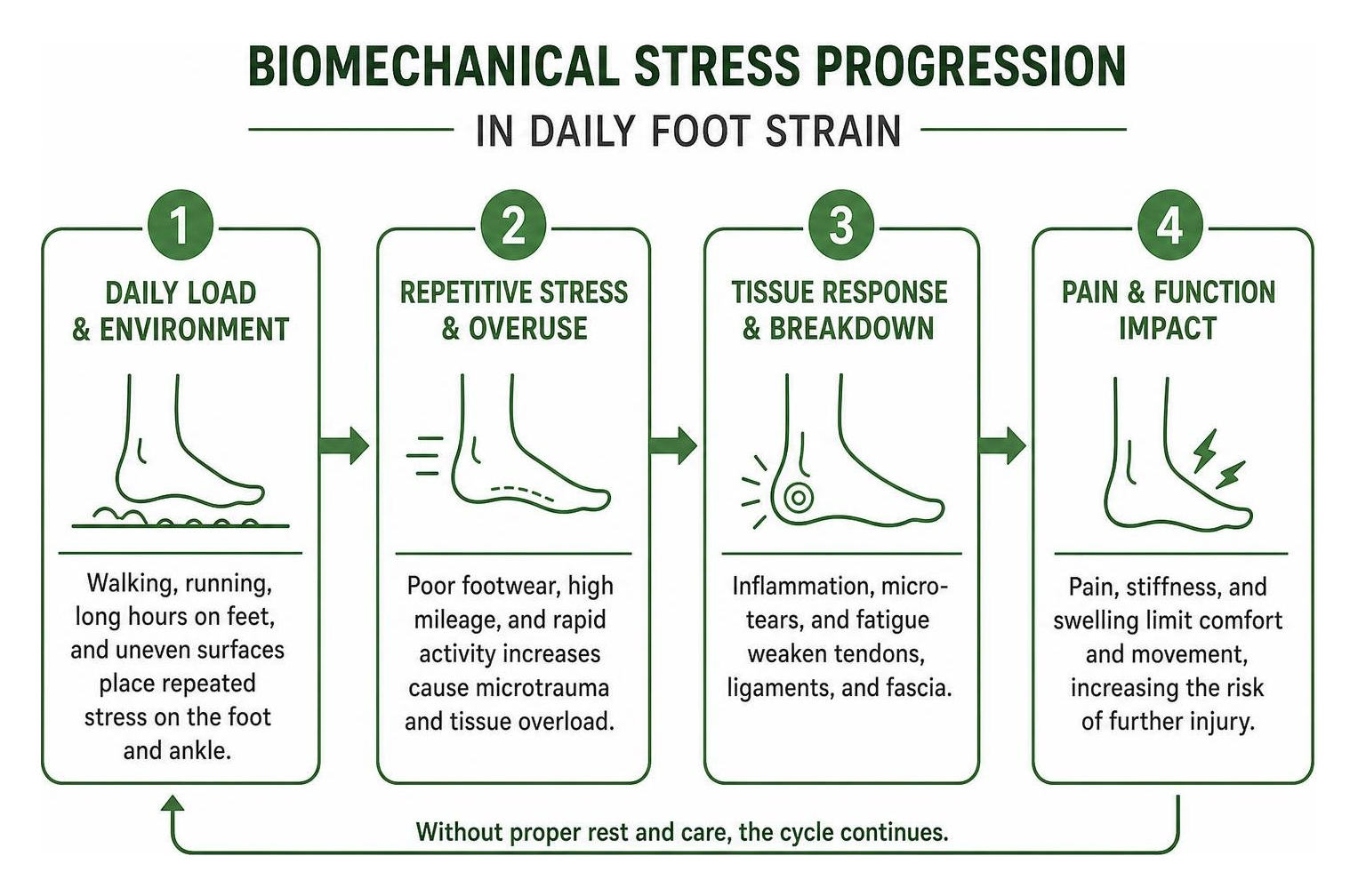
Similarly, high-mileage runs along the Mount Vernon Trail or extended shopping trips across local outlets demand consistent shock absorption. When you pair these active pursuits with improper footwear—such as rigid dress shoes during daily commutes or unsupportive, flat sneakers—the arch collapses, the heel strikes hard, and repetitive load distributes unevenly. Over time, minor muscle tightness evolves into persistent pain that compromises your overall mobility.
When to Seek a Comprehensive Podiatric Assessment
Discomfort that lingers beyond a few days is your body’s signal that conservative home rest is no longer sufficient. Scheduling a formal clinical evaluation allows us to isolate the root cause before compensatory gait patterns trigger secondary knee, hip, or lower back issues.
A thorough assessment in our practice includes:
- Detailed Medical and Activity History: Reviewing past injuries, current footwear, occupational demands, and training routines.
- Comprehensive Gait Analysis: Observing your natural walking mechanics to evaluate pronation, supination, and weight distribution.
- Targeted Joint and Soft-Tissue Palpation: Pinpointing exact areas of tenderness, ligamentous laxity, range of motion limitations, and swelling.
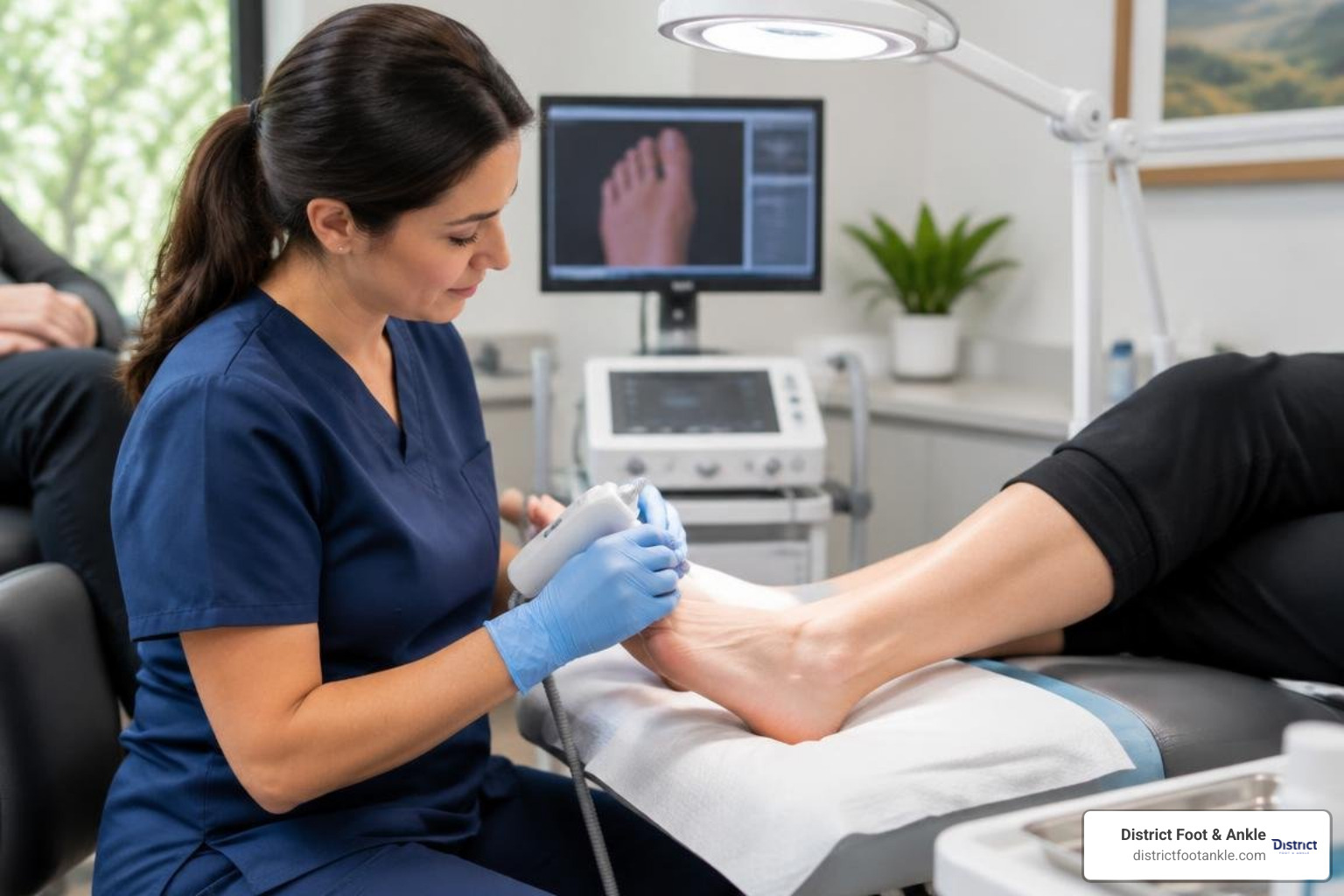
- On-Site Diagnostic Imaging: Utilizing high-resolution digital X-rays or ultrasound to visualize bony alignments, fractures, arthritic changes, and soft-tissue thickening in real time.
Modern Treatment Approaches: From Conservative Care to Surgery
Effective podiatric medicine does not rely on a one-size-fits-all protocol. We believe in an evidence-based continuum of care, prioritizing fast, lasting pain relief through the least invasive methods possible while maintaining advanced surgical solutions for complex pathology.
| Treatment Dimension | Conservative Protocols | Advanced Surgical Intervention |
|---|---|---|
| Primary Indication | Acute sprains, early-stage tendonitis, mild-to-moderate plantar fasciitis | Chronic ligament instability, complete tears, severe arthritic deformities |
| Common Modalities | Custom functional orthotics, targeted physical therapy, stretching regimens, NSAIDs, immobilization | Ligament reconstruction, tendon debridement/repair, joint fusion, osteotomies |
| Downtime / Recovery | Minimal to none; immediate return to modified activity | Weeks to months; structured non-weight-bearing and physical rehabilitation |
| Treatment Goal | Relieve inflammation, optimize biomechanics, restore soft-tissue flexibility | Restore structural integrity, eliminate mechanical friction, correct severe deformity |
Conservative Treatment Options for Alexandria Foot Pain
For the vast majority of our patients, non-invasive therapies successfully resolve symptoms without the need for operative intervention. By addressing mechanical imbalances and reducing localized tissue tension, we create the ideal environment for natural healing:
- Custom Functional Orthotics: Unlike over-the-counter shoe inserts that merely provide generic cushioning, medical-grade custom orthotics are fabricated from precise 3D impressions of your feet. They realign joint axes, redistribute plantar pressures, and offload strained structures like the plantar fascia and posterior tibial tendon.
- Focused Physical Therapy and Targeted Stretching: Tight gastrocnemius and soleus (calf) muscles place continuous upward tension on the Achilles tendon and plantar fascia. Dedicated eccentric loading exercises and stretching regimens restore elasticity and rebuild muscular endurance.
- Anti-Inflammatory Therapies: Strategic use of ice protocols, short-course oral anti-inflammatories, or targeted therapeutic injections helps quiet severe acute flare-ups, allowing patients to participate fully in functional rehabilitation.
- Protective Immobilization: For acute tendon tears or bone stress injuries, removable walking boots temporarily offload physical stress, giving damaged tissue uninterrupted time to mend.
Advanced Surgical Interventions for Chronic Instability
When non-invasive modalities have been thoroughly exhausted without satisfactory relief, or when acute trauma results in severe structural displacement, surgical intervention becomes the most definitive pathway to restoring stability. For a clinician-reviewed overview of ankle sprain evaluation and management, see the NCBI Bookshelf reference on acute ankle sprains.
Modern foot and ankle surgery utilizes refined techniques designed to minimize tissue trauma and accelerate recovery. Patients considering a procedure can also review our approach to foot and ankle surgery:
- Lateral Ankle Ligament Reconstruction: For patients with chronic ankle instability whose stretched ligaments can no longer prevent repetitive rolls, procedures such as the Broström-Gould technique anatomically repair and reinforce the lateral complex.
- Tendon Debridement and Repair: Chronic Achilles tendonosis often involves damaged, non-viable scar tissue. Surgical debridement removes degenerative fibers and repairs the healthy tendon to restore full tensile strength.
- Structural Realignment and Osteotomies: Severe bunion deformities, flatfoot collapses, or high-arched cavus feet frequently require precision bone cuts (osteotomies) to realign skeletal angles and prevent premature joint degeneration.
Post-operative rehabilitation is mapped out well before entering the operating room, ensuring that every patient transitions smoothly from protected healing back to pain-free impact activities.
The Value of a Multidisciplinary Recovery Plan
Foot pain rarely exists in isolation. Chronic discomfort carries a physical and emotional toll, disrupting exercise routines, increasing stress levels, and limiting social engagements. That is why our treatment philosophy integrates a holistic, multidisciplinary approach that looks beyond the immediate anatomical complaint.
A comprehensive recovery strategy combines biomechanical correction with practical lifestyle support:
- Nutritional and Inflammatory Support: Evaluating systemic factors, hydration, and anti-inflammatory dietary habits that support collagen synthesis and bone density.
- Footwear Education: Providing concrete guidance on shoe construction, heel-to-toe drop, and stability features tailored to your specific foot archetype.
- Continuous Progress Tracking: Monitoring recovery milestones systematically and fine-tuning physical therapy regimens to prevent plateauing.
- Patient Empowerment: Educating you on the mechanics of your condition so you understand exactly why specific stretches and movement modifications protect your feet over the long haul.
By combining expert diagnostics, modern non-invasive therapies, and collaborative patient care, we ensure our community stays active, capable, and pain-free.
Frequently Asked Questions About Foot Pain Relief in Northern Virginia
How can I find a top-rated podiatrist in Alexandria or Leesburg?
When selecting a foot and ankle specialist, look for board certification by recognized organizations such as the American Board of Foot and Ankle Surgery (ABFAS), extensive clinical experience in both conservative sports medicine and reconstructive surgery, and positive patient reviews highlighting transparent communication. Finding a practice that offers comprehensive in-office diagnostics—such as digital imaging and gait evaluations—ensures you receive a complete, streamlined assessment.
What non-invasive treatments work best for plantar fasciitis?
The most reliable conservative regimen for plantar fasciitis includes a combination of custom functional orthotics to control abnormal pronation, daily eccentric calf and arch stretching, supportive structured footwear, and structured physical therapy. In acute or stubborn cases, night splints and regenerative therapies can further accelerate tissue recovery without surgery.
When should I consider surgery for persistent foot or ankle pain?
Surgical intervention is typically considered when symptoms persist despite 3 to 6 months of dedicated conservative management, when structural damage (such as complete tendon tears or severe joint arthrosis) cannot heal through non-invasive means, or when chronic joint instability regularly causes the ankle to give way during normal daily activities.
Conclusion
Lingering foot or ankle discomfort should never be accepted as an inevitable part of aging or an active lifestyle. Whether you are dealing with sharp morning heel pain, a recurring sports injury, or persistent instability on uneven terrain, identifying the precise biomechanical trigger is the first step toward reclaiming your active life.
At District Foot & Ankle, our team provides specialized medical and surgical solutions tailored to your unique lifestyle and movement goals. Take the first step toward lasting mobility and request an appointment with our dedicated team today.