
Fat Pad Grafting for the Foot: A Revolutionary Treatment for Diabetic Foot Ulcers
Living with diabetes presents numerous health challenges, and one of the most serious complications affecting the feet is the development of chronic diabetic foot ulcers. These wounds can be devastating, leading to prolonged suffering, repeated hospitalizations, and in severe cases, amputation. However, innovative treatment approaches like fat pad grafting are offering new hope to patients who have struggled with wounds that simply won’t heal.
Understanding the Challenge of Diabetic Foot Ulcers
Diabetic foot ulcers affect approximately 15% of all patients with diabetes during their lifetime. These wounds typically develop on pressure points of the foot, with the area beneath the big toe—specifically under the first metatarsal head—being one of the most common and problematic locations. This particular site bears significant weight during walking and is notorious for being extremely difficult to heal.
The development of these ulcers involves multiple factors working against healing. Diabetic neuropathy causes loss of protective sensation, meaning patients often don’t feel the repetitive trauma that leads to skin breakdown. Poor circulation compromises the delivery of oxygen and nutrients necessary for wound healing. Additionally, structural foot deformities can create areas of excessive pressure that perpetuate the problem even after initial healing occurs.
A Complex Case Study: When Standard Treatments Aren’t Enough
Consider the journey of a patient who suffered from a diabetic foot ulcer for over a year before finding lasting relief. Her case illustrates both the challenges and the innovative solutions available in modern podiatric medicine.
The Initial Crisis
This patient’s ordeal began with a significant diabetic foot infection requiring emergency surgery. An incision and drainage procedure was performed in the operating room to remove and abscess, followed by hospitalization for intravenous antibiotics. Despite this aggressive initial treatment, months later the wound remained open and deep—a testament to the stubborn nature of these ulcers.
The Comprehensive Diagnostic Approach
When faced with a chronic, non-healing diabetic foot ulcer, a thorough evaluation is essential before proceeding with any treatment plan. This patient’s assessment included:
Advanced Imaging Studies: An MRI was crucial to rule out osteomyelitis (bone infection), a serious complication that would require entirely different treatment. Deep-seated infections must be identified and treated before any reconstructive procedures can succeed.
Vascular Testing: Confirming adequate blood flow to the foot is absolutely critical. Even the most sophisticated wound care techniques will fail without sufficient arterial circulation to deliver healing nutrients and oxygen to the tissues.
Biomechanical Assessment: A comprehensive evaluation revealed complex foot and ankle deformities that were contributing to abnormal pressure distribution across the sole of the foot.
Surgical Correction of Underlying Deformities
Once good blood flow was confirmed and infection was ruled out, the patient underwent limb deformity corrective procedures. These surgical interventions, which included strategic tendon releases, were designed to realign the foot and redistribute pressure away from the vulnerable first metatarsal region.
The importance of addressing biomechanical factors cannot be overstated. Without correcting the underlying structural problems that created excessive pressure in the first place, any wound that heals is likely to break down again—which is exactly what happened in this case.
The Recurring Problem: Fat Pad Atrophy
After the corrective surgery, the wound did initially heal. However, a frustrating pattern emerged: the ulcer would reopen, then heal, then reopen again. Each recurrence was smaller than the previous one, but the cycle continued.
Upon careful examination, the culprit was identified: significant atrophy (thinning) of the fat pad in the area where the chronic wound had been. This fat pad, which normally acts as nature’s cushion to protect the bones and tissues from pressure during walking, had essentially disappeared. Without this protective padding, even normal walking was causing enough repetitive trauma to break down the healed skin.
This is where a cutting-edge treatment called fat pad augmentation offered a solution.
What is Fat Pad Grafting?
Fat pad grafting, also known as fat pad augmentation, is an innovative procedure that restores the natural cushioning of the foot by injecting processed adipose (fat) tissue into areas where the fat pad has become depleted. Think of it as replacing the worn-out padding in your favorite shoes—except this padding is biological and becomes integrated into your own tissues.
The Source of the Graft Material
The fat tissue used in this procedure, such as Liposana, is derived from cadaveric sources. Just as patients generously donate their hearts, lungs, and kidneys to save lives, they also donate adipose tissue to help others. This donated tissue undergoes rigorous processing and screening to ensure safety, making it ready for transplantation into areas that need cushioning.
Using cadaveric tissue eliminates the need for harvesting fat from the patient’s own body (autologous fat transfer), which would require an additional surgical site and recovery period. The processed allograft tissue is convenient, safe, and ready to use.
The Procedure: Simple Yet Effective
Fat pad augmentation is remarkably straightforward, especially compared to the complex surgeries often required for diabetic foot complications. The entire procedure can be performed in a clinic setting under local anesthesia.
Here’s what happens during the treatment:
- Preparation: The foot is thoroughly cleaned and numbed with local anesthetic. For patients with diabetic neuropathy who have lost protective sensation, they often feel nothing during the procedure even with minimal anesthesia.
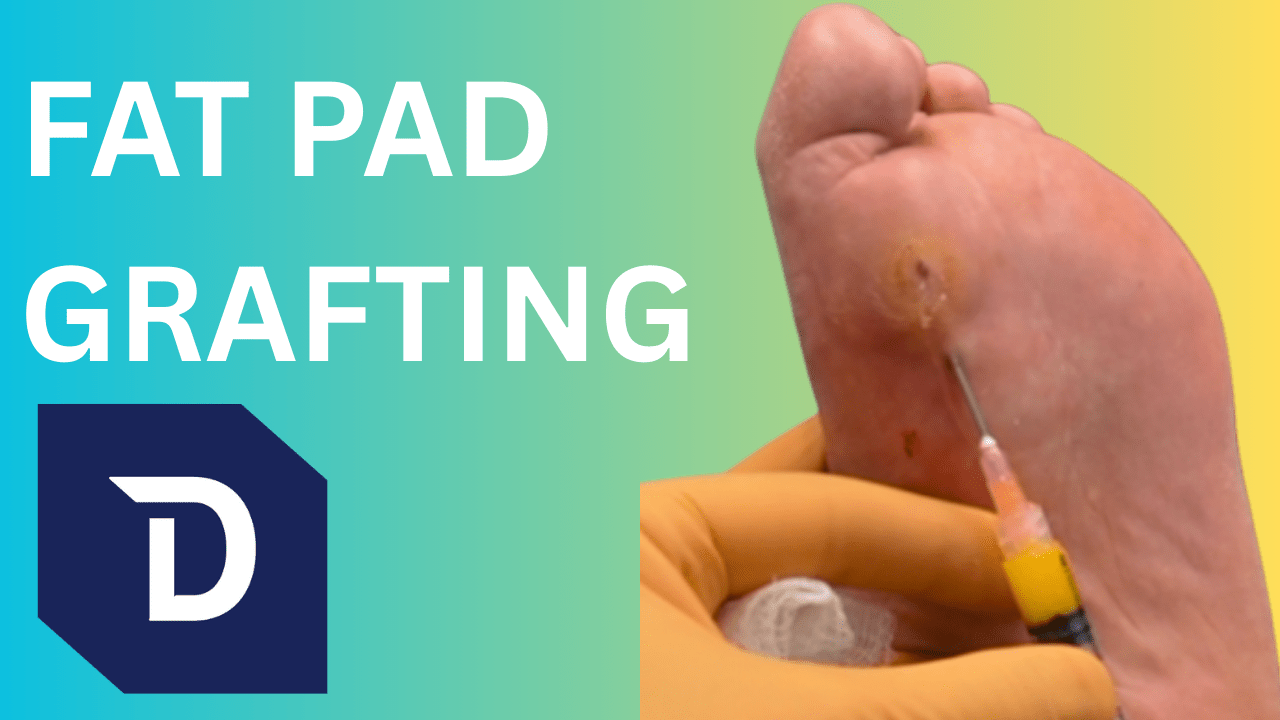
- Injection: Using a specialized needle, the processed fat tissue is carefully injected directly into the area where the fat pad has atrophied. The physician identifies the exact location where ulceration has repeatedly occurred and strategically places the graft to provide maximum cushioning.
- Post-Procedure Protection: A simple bandage is applied over the injection site. Crucially, felt padding is placed around the area to offload pressure. This padding serves a vital purpose: it protects the injection site while the fat graft integrates into the surrounding tissue, preventing the newly injected fat from dispersing away from where it’s needed most.
The entire procedure typically takes less than 30 minutes, and patients can walk out of the office the same day.
Recovery and Results
Recovery from fat pad augmentation is remarkably easy compared to traditional surgical interventions. There’s no need for extended non-weight-bearing periods or complex wound care protocols. Patients can typically return to regular activities within days, though specific activity restrictions may apply based on individual circumstances.
The key to successful integration of the fat graft lies in protecting the area during the initial healing period. The felt padding applied around the injection site redistributes pressure away from the treated area, giving the graft time to establish itself and become incorporated into the patient’s tissues.
For the patient in our case study, the results were transformative. After months of dealing with a cycle of healing and re-ulceration, the fat pad augmentation finally provided the cushioning her foot desperately needed. The procedure gave her body what nature had lost—protective padding that could withstand the daily pressures of walking.
Who is a Candidate for Fat Pad Grafting?
Fat pad augmentation is not appropriate for every patient with foot problems, but it can be life-changing for the right candidates. Ideal patients include:
- Diabetic patients with recurrent ulcers in areas of fat pad atrophy, particularly under the metatarsal heads
- Individuals with forefoot/ball of foot pain who have lost cushioning in the ball of the foot
- Athletes or active individuals with painful fat pad atrophy causing metatarsalgia (ball of foot pain)
- Patients with previous foot surgeries that resulted in loss of protective fat padding
However, certain conditions must be addressed first:
- Adequate blood flow must be confirmed through vascular testing
- Active infection, particularly osteomyelitis, must be ruled out or treated
- Underlying biomechanical deformities should be corrected when possible
- The patient must be able to comply with post-procedure offloading protocols
The Future of Diabetic Foot Care
Fat pad grafting represents a significant advancement in the comprehensive treatment of diabetic foot complications. By addressing the loss of natural cushioning that occurs with chronic wounds and age, this procedure fills a critical gap in our treatment arsenal.
The approach exemplified by this case of Dr. Nodelman’s—combining thorough diagnostic evaluation, surgical correction of deformities, and innovative regenerative techniques—represents the future of diabetic foot care. Rather than accepting chronic wounds as an inevitable consequence of diabetes, modern podiatric medicine offers integrated solutions that address both the symptoms and root causes of these challenging conditions.
Frequently Asked Questions
What are the potential risks associated with fat pad grafting?
While fat pad grafting is generally considered safe, like any medical procedure, it carries some risks. Potential complications include infection at the injection site, allergic reactions to the graft material, or inadequate integration of the fat tissue into the surrounding area. Additionally, if the underlying biomechanical issues are not addressed, the procedure may not yield the desired results. It’s essential for patients to discuss these risks with their healthcare provider to make an informed decision based on their specific health conditions.
How long does the fat pad grafting procedure take?
The fat pad grafting procedure is relatively quick, typically taking less than 30 minutes to complete. It is performed in a clinic setting under local anesthesia, allowing patients to remain awake and comfortable during the process. After the procedure, patients can usually walk out of the office the same day, making it a convenient option for those seeking relief from foot pain associated with fat pad atrophy.
What is the recovery process like after fat pad augmentation?
Recovery from fat pad augmentation is generally straightforward compared to more invasive surgical options. Patients can typically resume regular activities within a few days, although specific restrictions may apply based on individual circumstances. The key to successful recovery is protecting the injection site with felt padding to redistribute pressure and allow the graft to integrate properly into the surrounding tissue. Following post-procedure care instructions is crucial for optimal healing.
Can fat pad grafting be performed on both feet?
Yes, fat pad grafting can be performed on both feet if necessary. However, the decision to treat one or both feet will depend on the individual patient’s condition, the extent of fat pad atrophy, and the presence of any underlying issues. A thorough evaluation by a qualified podiatric physician is essential to determine the best course of action for each patient, ensuring that all factors are considered before proceeding with treatment.
How does fat pad grafting compare to traditional treatments for diabetic foot ulcers?
Fat pad grafting offers a unique advantage over traditional treatments for diabetic foot ulcers by directly addressing the loss of natural cushioning in the foot. While standard treatments may focus on wound care and infection management, fat pad augmentation restores the protective padding that is often depleted in patients with chronic ulcers. This innovative approach can lead to more sustainable healing outcomes, especially for those who have not responded well to conventional therapies.
Is fat pad grafting suitable for all diabetic patients?
Fat pad grafting is not suitable for all diabetic patients. Ideal candidates typically include those with recurrent ulcers in areas of fat pad atrophy, individuals experiencing forefoot pain, and those with previous foot surgeries that have led to cushioning loss. However, patients must also meet specific criteria, such as having adequate blood flow and no active infections. A comprehensive evaluation by a healthcare professional is necessary to determine candidacy for this procedure.
What should patients expect during the consultation for fat pad grafting?
During the consultation for fat pad grafting, patients can expect a thorough evaluation of their foot health, including a review of their medical history, current symptoms, and any previous treatments. The physician may perform diagnostic tests, such as vascular assessments and imaging studies, to determine the underlying causes of foot ulcers. This comprehensive approach helps ensure that fat pad grafting is an appropriate treatment option and allows for a tailored care plan to address the patient’s specific needs.
Conclusion
For patients struggling with chronic diabetic foot ulcers, particularly those experiencing recurrent breakdown in areas of fat pad atrophy, fat pad augmentation offers renewed hope. This relatively simple procedure can break the cycle of healing and re-ulceration by restoring the natural cushioning that protects vulnerable tissues.
If you or a loved one is dealing with a chronic diabetic foot ulcer that has been resistant to conventional treatments, it’s worth discussing whether fat pad grafting might be appropriate. When combined with comprehensive diabetic foot care—including proper glucose control, regular foot examinations, appropriate footwear, and correction of biomechanical abnormalities—this innovative treatment can help patients achieve lasting healing and return to active, fulfilling lives.
The journey from a severe, infected diabetic foot ulcer to complete healing is rarely straightforward, but with persistence, comprehensive care, and access to advanced treatments like fat pad grafting, even the most challenging wounds can finally close for good.
This article is based on an actual patient case and represents current approaches to complex diabetic foot care. Every patient’s situation is unique, and treatment plans should be developed in consultation with a qualified podiatric physician or foot and ankle specialist.
Meet Our Podiatrists
Dr. Lonny Nodelman, DPM, FACFAS Dr. Nodelman is the founder and owner of District Foot and Ankle in Alexandria, Virginia. Board certified in foot surgery and a Fellow of the American College of Foot and Ankle Surgeons, he specializes in sports medicine injuries including ankle sprains, stress fractures, plantar fasciitis, and Achilles tendinitis. He also treats foot deformities like bunions and hammertoes, and focuses on limb salvage for diabetic wounds and infections using advanced techniques such as in-office skin grafting.
An active runner and cyclist himself, Dr. Nodelman understands athletes’ needs and stays current with innovative treatments like shockwave therapy and platelet-rich plasma injections. He earned his undergraduate degree in Biochemistry from the University of Ottawa, graduated from New York College of Podiatric Medicine, and completed his residency and surgical fellowship at Harvard Medical School. He maintains hospital privileges at Inova Fairfax Medical Campus, Inova Alexandria Hospital, and Inova Mount Vernon Hospital.
Dr. Sammar Abueldoleh, DPM Known to patients as “Dr. Sam,” she brings personal experience as a former collegiate athlete to her practice. A Philadelphia native and Villanova University graduate (Cum Laude), she served underserved communities as an AmeriCorps volunteer before attending Temple University School of Podiatric Medicine, where she was Valedictorian.
Dr. Sam completed her surgical residency at Legacy Health/Kaiser Northwest Permanente, logging over 1,300 surgical cases. She specializes in foot and ankle trauma, reconstructive surgery, sports medicine, limb deformity correction, limb salvage, and bunion surgery. Currently board qualified in foot and ankle surgery, she stays active through fitness, hiking, and recreational sports, and enjoys traveling and spending time with family and friends.